




Nov 05-2026
Join Us in Frankfurt | Zhaoyi Bio at Fi Europe 2026
READ MORE >
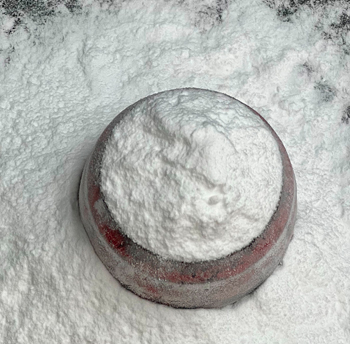
Calcium zincate is a calcium-zinc hydroxy complex inorganic compound, commonly used in alkaline battery electrode materials and polymer flame-retardant and smoke-suppressing fillers. It has a stable crystal structure, excellent heat resistance, and decomposes when exposed to acid. It can't be used as a dietary zinc or calcium supplement and has no food-grade applications—it's strictly for industrial chemical use.

| Sodium Alginate |  |
CAS Number | 6107-56-8 |
Molecular Weight | 337.86 |
Molecular Formula | CaZn2(OH)6·2H2O |
Solubility | Almost insoluble in water; decomposes in acid; insoluble in ethanol, acetone, and other organic solvents |
Color | White |
Odor | Odorless |
Form | Crystalline powder, monoclinic system, non-hygroscopic |
Melting Point | No melting point; loses crystal water and decomposes at 280–400°C, forming a mixture of CaO and ZnO at high temperatures |
Boiling Point | Decomposes directly under normal pressure when heated, no boiling point |
1. In the battery field: inhibits zinc dendrite formation, extends the cycle life of secondary zinc batteries, and stabilizes the electrode system.
2. Flame-retardant fillers: good smoke suppression, works at low addition levels, doesn’t noticeably reduce the mechanical strength of plastics or rubber, and can partially replace zinc borate and antimony trioxide.
3. High thermal stability, dehydration temperature 280–400°C, suitable for high-temperature processing polymer systems.
Zinc anode active materials that reduce dendrites and improve battery cycling performance.
Used in plastics, rubber, wires and cables, and fibers as smoke-suppressing flame retardant fillers.
Flame-retardant and smoke-suppressing components in inorganic fireproof coatings.
Additives for ceramic preparation.