




Nov 05-2026
Join Us in Frankfurt | Zhaoyi Bio at Fi Europe 2026
READ MORE >
Sucrose iron is a large molecular colloid complex formed by ferric hydroxide and sucrose. It's often used in medical intravenous iron supplements. By giving it through an IV, it avoids the digestive side effects of oral iron. Clinically, it's used to treat iron-deficiency anemia in people who can't tolerate or properly absorb oral iron.

CAS Number | 8047-67-4 |
Molecular Weight | 34,000–60,000 Da (high polymer weight average); small molecule database 736.06 is a simplified model, not the actual product molecular weight |
Molecular Formula | [Na2Fe5O8(OH)⋅3H2O]n⋅m(C12H22O11) |
Solubility | Easily soluble in water, forming a deep reddish-brown colloidal solution; insoluble in ethanol, acetone, and ether; aqueous solution is strongly alkaline with pH 10.5–11.1 |
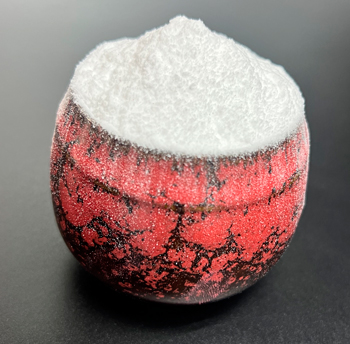
Color | Brown to dark brown-black amorphous powder; aqueous solution is a deep reddish-brown transparent colloid |
Taste | Slight metallic iron taste |
State | Amorphous powder, colloidal complex, pH-sensitive |
Melting Point | No true melting point; thermal decomposition occurs above 160°C, losing the sucrose ligand |
Boiling Point | No actual boiling point; heating the aqueous colloidal solution will cause decomposition |
1. Efficient IV iron supplementation: Directly enters the bloodstream, unaffected by the digestive tract or compounds like phytates and oxalates, quickly boosting serum iron and ferritin levels, improving iron deficiency.
2. Easy on the stomach: Bypasses the digestive system completely, avoiding nausea, stomach pain, or constipation caused by oral iron supplements, perfect for those who can't tolerate oral iron.
3. Low free iron content, controllable safety: The trivalent iron ions are wrapped in a colloid, so there's little free iron, reducing oxidation and toxicity risks.
4. Helps with iron-deficiency anemia: Iron is crucial for hemoglobin production, improving hemoglobin levels and easing symptoms like fatigue and low oxygen.
5. Suitable for special patient groups: Great for people with kidney disease on dialysis, post-surgery, or inflammatory bowel disease who have trouble absorbing oral iron to correct deficiency.
Sucrose iron injection, given intravenously, clinically used to treat iron-deficiency anemia, mostly for patients with chronic kidney disease on dialysis, or those who cannot tolerate oral iron or have absorption problems.
An intravenous iron supplementation plan for patients who cannot eat orally.
Raw materials for medical and pharmacological research experiments.