May 16-2026
Zhaoyi Bio Chelated Glycinates: High-Absorption, Manufacturing-Friendly Minerals for Your Formulations
READ MORE >
For the nutraceutical industry, a few data points deserve close attention from every brand and sourcing professional:
The global women’s health supplements market is projected to reach $60.4 billion in 2026, growing at a CAGR of 6.3% to $98.6 billion by 2034
• Women account for 58% of vitamin and mineral consumers — 16 percentage points higher than men
• Multivitamin/mineral formulations account for 26% of the category, while single minerals represent 18% — together nearly half the market
Behind these numbers lies a market being fundamentally redefined. Women are no longer “passively supplementing” basic nutrition — they are actively seeking targeted, effective, and user-friendly functional products.
For mineral ingredient suppliers, the signal is clear: the women's health segment demands not just “presence,” but “superiority” — gentler, better-absorbed, and better-suited to different life stages.

Women’s mineral requirements have a unique physiological basis.
From menarche to menopause, women experience lifelong hormonal fluctuations. Menstrual blood loss depletes iron. Pregnancy and lactation dramatically increase demands for calcium, iron, and zinc. Menopause-related estrogen decline accelerates bone calcium loss. These physiological characteristics mean women require significantly higher levels of specific minerals than men — with distinctly different priorities at each life stage.
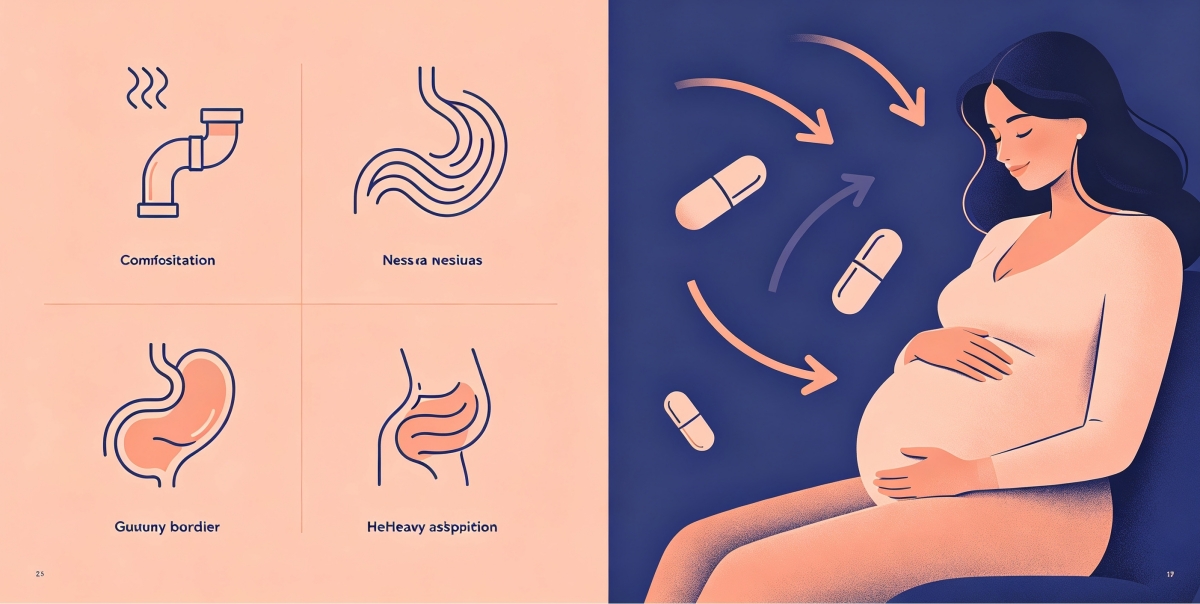
At the same time, women are exceptionally sensitive to supplement “experience.” The common side effects of traditional inorganic minerals — constipation, nausea, metallic taste, bloating — are particularly unacceptable to female consumers. In the age of social media, one bad experience can mean losing a customer forever.
This is where chelated mineral salts deliver their value.
Menstrual blood loss is the primary cause of iron deficiency in women. Globally, iron deficiency is the most common micronutrient deficiency among women of childbearing age.
The problems with traditional iron sources (ferrous sulfate) are well-known: constipation, nausea, metallic taste. Industry observations suggest approximately 20-30% of users report some degree of adverse effects, with many discontinuing use after 2-3 weeks.
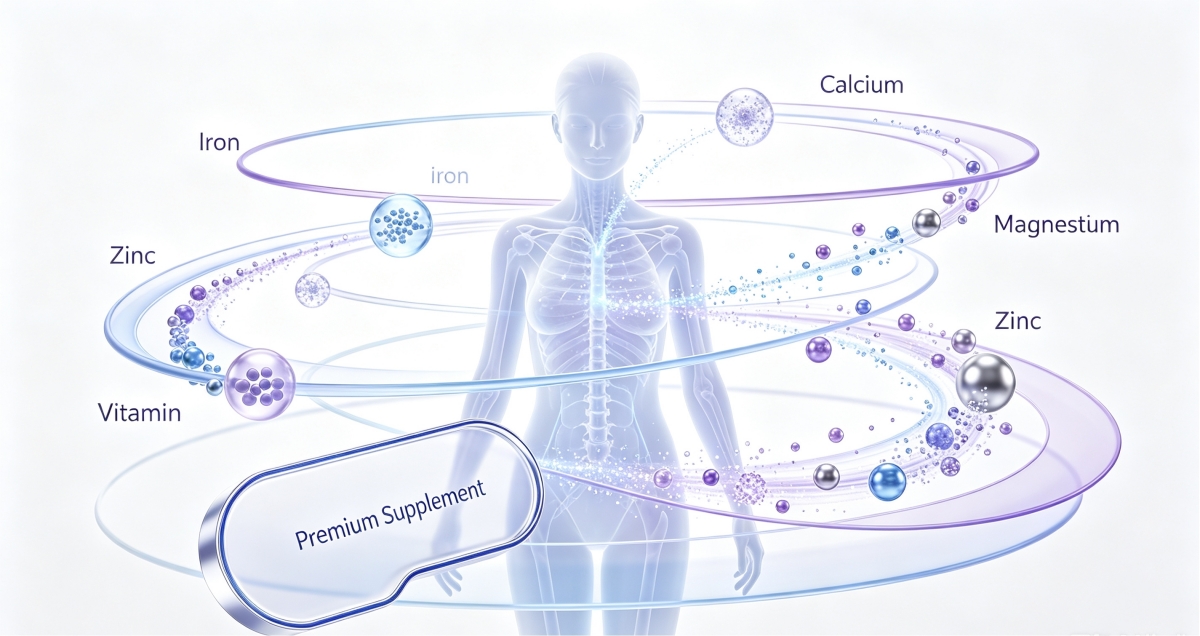
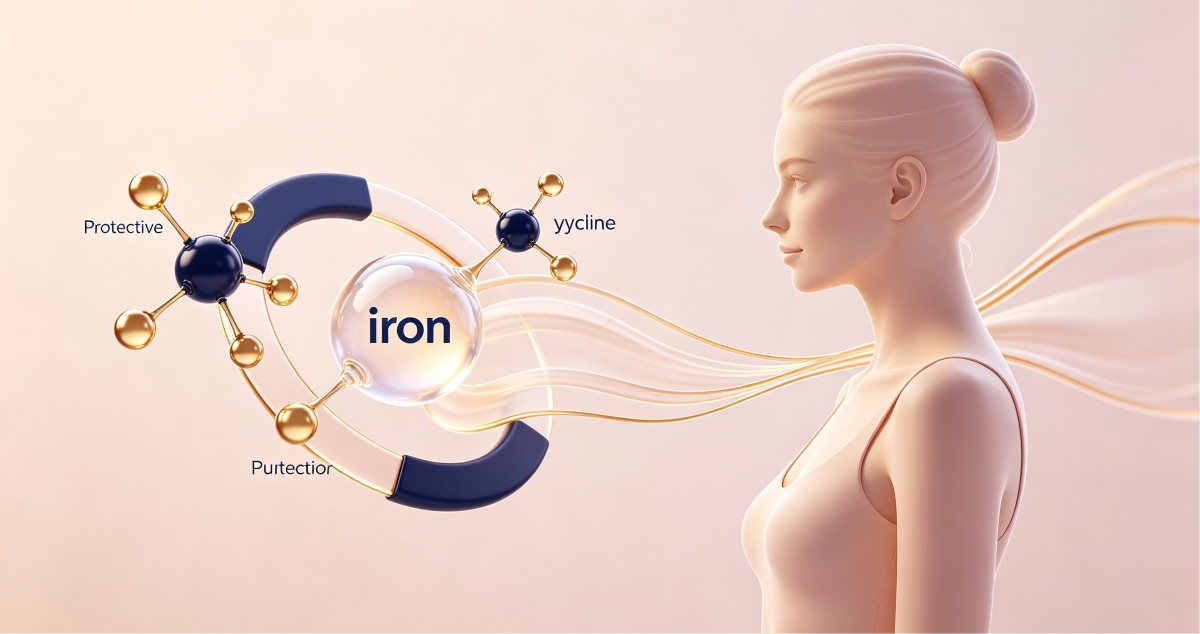
Ferrous Bisglycinate features a double-glycine chelate structure, where two glycine molecules “wrap around” the iron ion, preventing it from binding with interfering substances like phytates and oxalates in the GI tract. Clinical research shows its absorption rate can be up to 3.7 times higher than conventional iron sources, with exceptional gastric tolerance. No metallic taste, very low constipation incidence — these properties make it ideal for prenatal iron supplementation, post-menstrual recovery, and daily vitality support.
Mineral requirements peak during pregnancy. Magnesium, zinc, iodine, and others are equally essential.
The core challenge for prenatal supplements: deliver high efficacy with zero side effects. Pregnant women have virtually no tolerance for constipation, nausea, or gastric discomfort.
• Ferrous Bisglycinate: No constipation, no nausea — the preferred iron form for prenatal use
• Calcium Bisglycinate: High absorption, gastric acid-independent, no gas, no constipation — ideal for pregnant women with reduced stomach acid
• Magnesium Glycinate: Gentle magnesium supplementation supporting muscle relaxation and sleep quality without adding digestive burden
After age 40, total mineral content in women gradually decreases with age, and bone mineral density T-scores begin to decline — starting earlier than in men. Postmenopausal estrogen decline accelerates bone calcium loss, significantly increasing osteoporosis risk.
But bone health has never been just about “calcium.” Calcium deposition in bone requires magnesium participation, and bone cell differentiation requires zinc promotion. Isolated calcium supplementation has limited effectiveness. Only the synergistic action of calcium, magnesium, zinc, vitamin D, and K2 can truly maintain bone density.
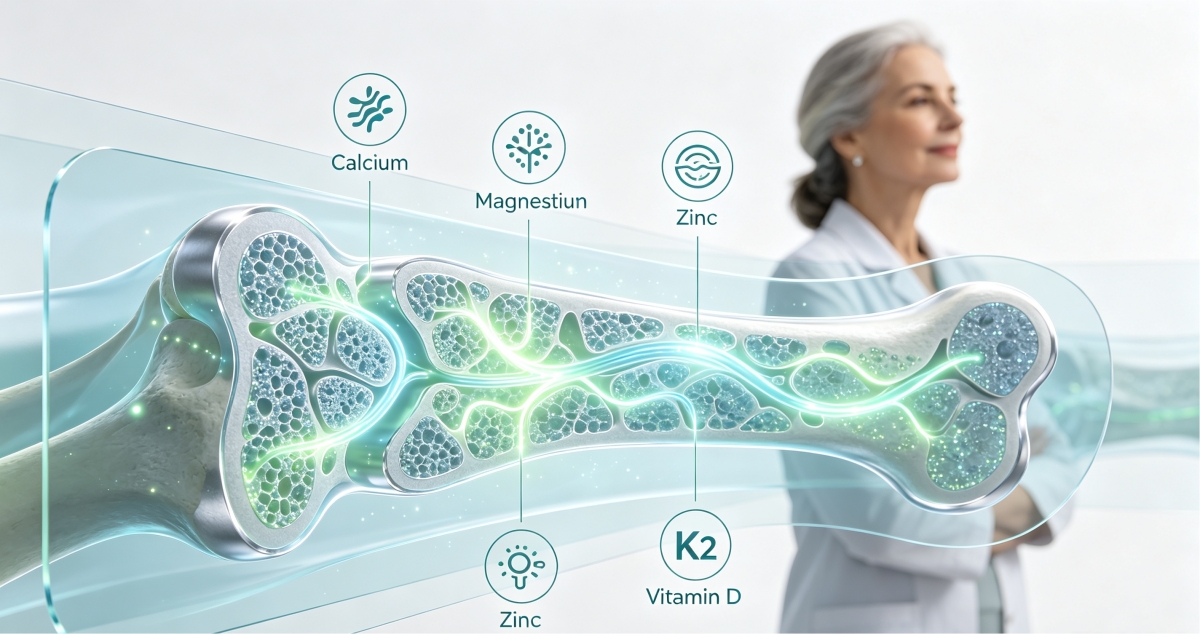
• Calcium Bisglycinate: Efficient absorption, gastric acid-independent, no constipation
• Magnesium Glycinate: Participates in calcium deposition in bone while supporting relaxation and sleep
• Zinc Glycinate: Promotes bone cell differentiation and bone formation
The women‘s health supplement market is expanding at a CAGR of 6.3%. The vitamins and minerals segment is expected to capture the largest market share. This is not a question of “whether,” but “how.”
58% of vitamin/mineral consumers are women. Among them, 47% cite “self-care” as a decision driver, and 27% explicitly identify as “ingredient and efficacy-focused”. They read ingredient labels and distinguish between commodity and premium ingredients.
In a commoditized market, ingredients are one of the few dimensions where real barriers can be built. Adopting high-absorption, zero-side-effect chelated mineral salts — rather than conventional inorganic forms — is an effective path for brands to break free from “identical ingredient lists”.
The women's health market is evolving from “general supplementation” to “precision nutrition.” In this evolution, mineral ingredient selection is no longer just a line item on a purchase order — it is the starting point of product competitiveness.
For brands: Choosing chelated mineral salts means choosing a product path centered on “experience first.” Gentle, effective, burden-free — these are the keywords women are willing to pay for and stick with long-term.
For sourcing decision-makers: Understanding the differences in women‘s mineral needs across life stages, and understanding the fundamental differences between chelated and conventional forms in absorption and user experience, is the prerequisite for making better sourcing decisions.
If you are planning product lines targeting female consumers, we welcome the opportunity to discuss how differentiated chelated mineral salts can help build unique market competitiveness for your brand