
Mar 27-2026
Calcium & Magnesium Synergy: The Smarter Formula for Bone and Cardiovascular Health
READ MORE >
In sports nutrition, protein, creatine, and BCAAs often dominate the conversation. But there's a group of unsung heroes that truly underpin an athlete's ability to perform at their peak: minerals.
The global sports supplement market was valued at $15.46 billion in 2025 and is projected to reach $31.53 billion by 2034. Among its fastest-growing segments are vitamins and minerals.
Yet not all mineral forms can meet the rigorous demands of athletes. A quiet but significant upgrade is underway—from traditional inorganic minerals to chelated minerals. Why?
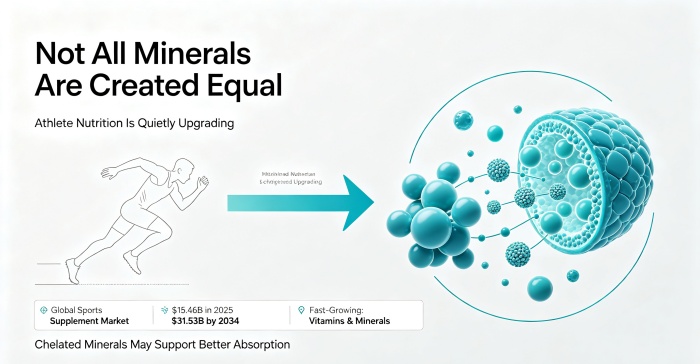
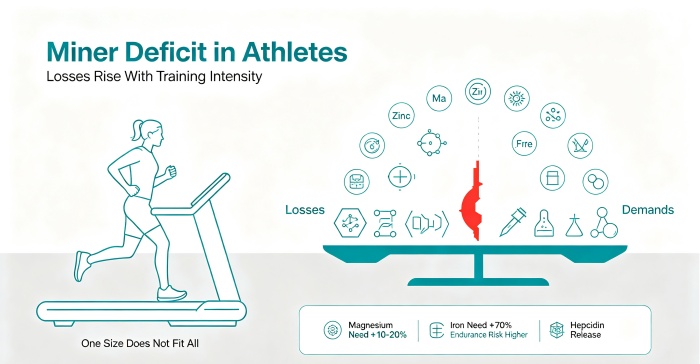
Athletes face a fundamental paradox: the harder they train, the more minerals they lose—and the more they need.
Intense exercise depletes magnesium, zinc, iron, and other electrolytes through sweat and urine. Meanwhile, exercise-induced oxidative stress and muscle microdamage further accelerate mineral consumption.
Take magnesium: a 2023 systematic review found that individuals engaged in intense exercise require 10-20% more magnesium than sedentary people. Magnesium deficiency can directly impair physical performance.
Iron is equally critical. Endurance athletes face elevated risk of iron deficiency due to exercise-associated inflammation and hepcidin release. Athletes' iron requirements are estimated to be 70% higher than the general population.
For sourcing professionals: understanding the unique mineral needs of athletic populations is the first step to selecting the right ingredients. What works for average consumers may not suffice for athletes.
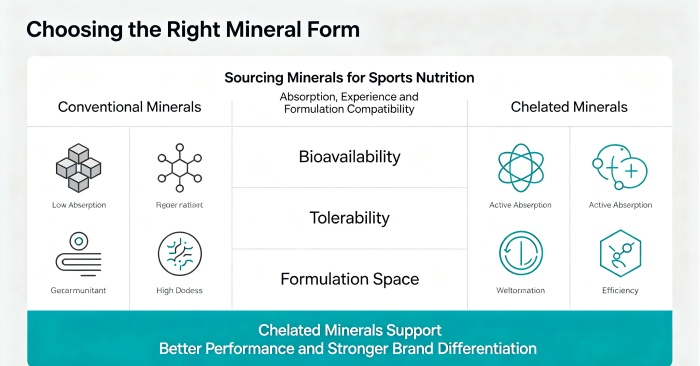
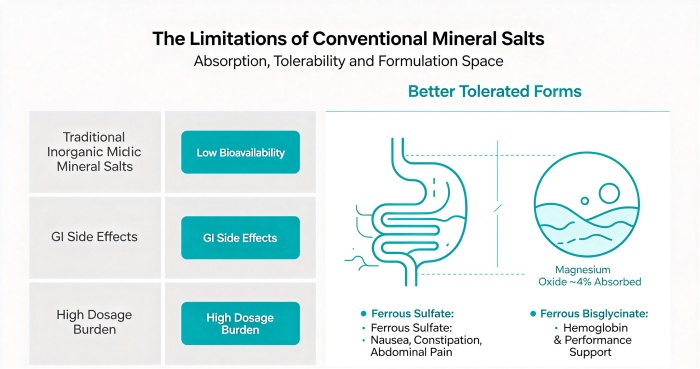
Most traditional sports nutrition products still use inorganic mineral salts (magnesium oxide, ferrous sulfate, calcium carbonate). Athletes are abandoning them for three reasons:
Inorganic mineral salts have poor solubility in the GI tract and are prone to binding with phytates and oxalates, forming insoluble precipitates. Magnesium oxide, for example, has an absorption rate of only about 4%.
Traditional iron sources like ferrous sulfate often cause nausea, constipation, and abdominal pain. For athletes, GI discomfort before or after training directly interferes with nutrient timing and recovery quality.
Low bioavailability requires higher dosages to achieve desired effects, consuming valuable formulation space that could accommodate other active ingredients.
In one study of weightlifting athletes, those supplementing with ferrous bisglycinate showed significant increases in blood hemoglobin levels and maximal lifting performance after two months, compared to a placebo group. While traditional iron sources can also improve iron markers, they often come at the cost of GI side effects.
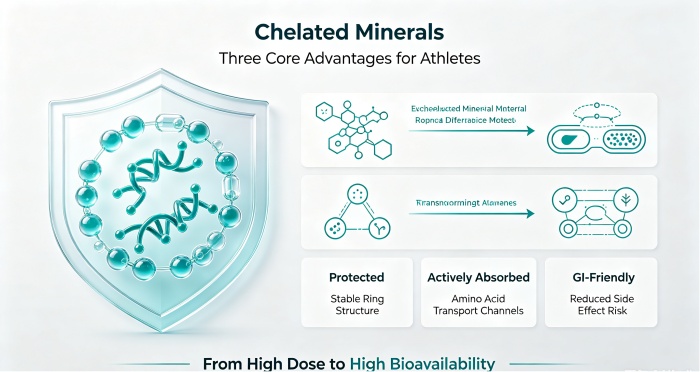
Chelated minerals bind mineral ions to amino acids (such as glycine) to form stable ring structures. This delivers three core advantages:
The chelate structure acts as a "shield," preventing minerals from binding with interfering substances in the GI tract, ensuring more active ingredients reach absorption sites.
Amino acid-mineral chelates can be absorbed intact through dedicated amino acid transport channels, bypassing the highly competitive free ion absorption pathway. Research indicates chelated minerals can be several times more absorbable than inorganic forms.
Chelated minerals are exceptionally GI-friendly, virtually eliminating the side effects common to conventional mineral salts. For athletes, this means worry-free supplementation before and after training.
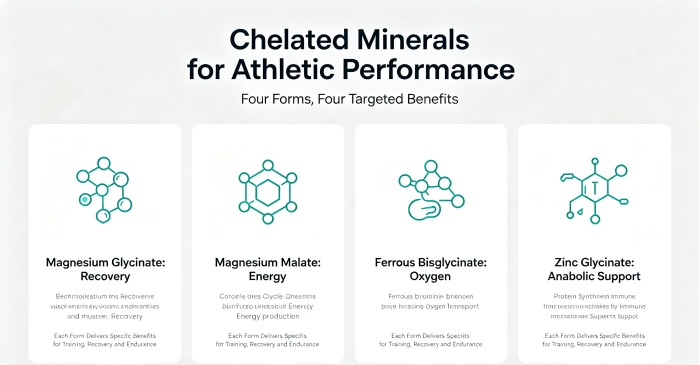
Magnesium is a key regulator of muscle contraction and relaxation. A systematic review found that magnesium supplementation reduces muscle soreness, improves performance, accelerates recovery, and exerts a protective effect on muscle damage.
Specifically for magnesium glycinate: one study found that 350 mg daily significantly reduced post-resistance-training muscle soreness and improved perceptual measures linked to performance and recovery. The glycinate form ensures intestinal absorption while preventing diarrhea.
Applications: Post-workout recovery formulas, pre-sleep repair support, muscle protection during high-intensity training.
Malic acid is a key intermediate in the Krebs cycle (the body's core energy production pathway). Magnesium Malate combines magnesium with malic acid, directly supporting cellular energy production alongside magnesium supplementation.
Magnesium Malate is particularly suited for anti-fatigue and sports nutrition applications. For endurance athletes who need sustained output over long periods, it helps reduce energy depletion during intense exercise. When paired with creatine, malic acid also improves creatine absorption.
Applications: Endurance formulations, pre-event energy support, anti-fatigue products.
Iron is the core component of hemoglobin, which directly determines the blood's oxygen-carrying capacity. For athletes, adequate iron stores mean higher VO₂ max and greater endurance output.
Ferrous Bisglycinate features a double-glycine chelate structure that "wraps" the ferrous ion between two glycine molecules. This structure delivers significantly better absorption than ferrous sulfate, with virtually no GI distress.
A study of weightlifting athletes found that after two months of ferrous bisglycinate supplementation, blood hemoglobin levels and 1-repetition maximum lifting performance both increased significantly. Researchers suggest that all strength sports players should consider proper ferrous bisglycinate chelate supplementation.
Applications: Endurance formulations, strength training support, iron supplements for female athletes.
Zinc is involved in the activity of over 300 enzymes and is essential for protein synthesis, immune function, and hormone metabolism. Intense training accelerates zinc loss, and deficiency can impair muscle repair and anabolic processes.
As an amino acid chelate, Zinc Glycinate offers better absorption than conventional forms like zinc gluconate. The glycine released upon metabolism can further support muscle growth and recovery.
Applications: Post-workout repair formulations, immune support products, anabolic support formulas.
Forward-thinking sports nutrition brands are systematically replacing traditional inorganic minerals with chelated alternatives.
Some premium brands have launched products featuring magnesium and zinc amino acid chelates, claiming support for normal muscle function and fatigue reduction. Research also shows that combinations of three mineral chelates can improve aerobic exercise performance in young women.
Magnesium creatine chelate has been shown to improve total sprint time and power output in repeated sprint tests. These examples suggest chelated minerals are moving from "niche choice" to "industry standard."
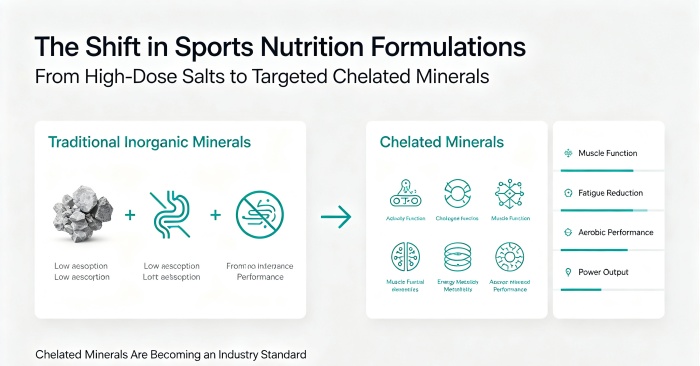
The sports nutrition market is evolving from "protein-first" to "comprehensive nutrition." In this upgrade, mineral form selection is emerging as a critical battleground for brand differentiation.
For sourcing professionals: understanding the fundamental differences between chelated and conventional minerals in absorption, user experience, and formulation compatibility is the foundation for better sourcing decisions.
For brands: choosing chelated minerals means choosing a product path where athletes can truly "feel the difference"—higher absorption, fewer side effects, better performance.