





Dec 15-2025
Macroelements and Trace Elements – Essential Mineral Ingredients for Health, Nutrition and Performance
READ MORE >
In the supplement industry, a quiet but profound shift is underway. Consumers are no longer satisfied with vague health claims and mysterious ingredient lists. They are becoming critical, informed, and demanding—and they are taking a hard look at what is actually in their supplements.
For sourcing professionals, this shift is not merely a marketing trend. It is a fundamental change in how consumers evaluate products, and it directly impacts which raw materials brands will need to stay competitive.
This article examines how consumer cognition has evolved, what "transparency" really means in the mineral ingredients space, and why sourcing decisions must adapt to this new reality.
Over the past three years, the functional food and supplement industry has undergone a paradigm shift. Consumers have moved from trusting abstract health concepts to demanding scientific formulation logic.
Data from the Chinese functional food market illustrates this transformation clearly:
Consumer attention to "health improvement and functional support" declined from 47% to 42%
Attention to "product innovation and technological sophistication" doubled to 14%, with 95% satisfaction
In the liquid calcium category specifically, interest in "absorption effects and health improvement" dropped from 55% to just 13%, while attention to "nutritional composition and formulation science" surged from 14% to 47%
This does not mean consumers no longer care about absorption. It means they have shifted their focus upstream—to the ingredient itself and the science behind it. They want to understand why a formulation works, not just be told that it does.
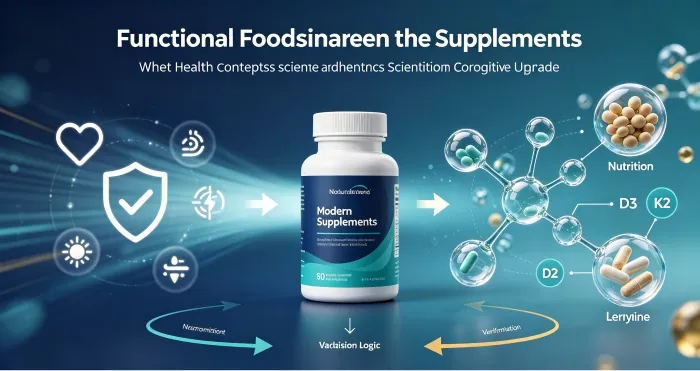
In an environment of anxiety and information overload, the lag and ambiguity of health outcomes have driven consumers toward immediate, verifiable logic. They learn the "golden formula"—for calcium, that means understanding why D3, K2, and lysine work together. They buy into the science at the moment of purchase, gaining a sense of "scientific certainty" that replaces blind faith in vague promises.
This shift forces brands to move from "efficacy promotion" to "mechanism explanation." Products that cannot demonstrate their technical patents or formulation logic risk being dismissed as mere "placebos".
Consumers are increasingly skeptical about what is actually in their vitamins and capsules. With over 100,000 supplements now on the market—up from about 3,000 when Ritual launched—and limited regulatory oversight, trust has become a scarce commodity.
In response, a growing number of brands are making transparency their defining feature. Ritual, for example, created the industry's first visible supply chain—openly naming its ingredient suppliers and their manufacturing locations. The brand earned the Clean Label Project's Purity Award across every product and committed $5 million to clinical research, with the goal of backing every product by human clinical studies by 2030.
This approach is paying off. Ritual surpassed $250 million in retail value, demonstrating that consumers are willing to pay for transparency and science-backed quality.
Other brands are following suit. Cymbiotika publicly shares formula specifications and production information. Herba Health Inc. became the first major Canadian brand to publish comprehensive third-party laboratory test reports. Clean supplement brand Puori received the Clean Label Project Transparency Award.
The message is clear: transparency is no longer optional for premium brands—it is becoming table stakes. According to Nielsen, 82% of consumers want more transparency in product labels. In an era of instability and skepticism, transparency, safety, and scientific validation are essential to building lasting consumer confidence.
As one industry expert put it: "Consumers want a brand they can trust. They may not be food scientists or dieticians, but they can smell honesty". Trust compounds faster than impressions, and every interaction should be treated as a "trust deposit" or a "trust withdrawal".
Nowhere is this cognitive shift more visible than in the mineral supplement category.
Consumers are increasingly aware that not all mineral forms are created equal. They are learning that "magnesium" is not just magnesium—and that the difference between magnesium oxide and magnesium bisglycinate can mean the difference between feeling a benefit and feeling nothing at all.
Innova Market Insights data shows a 12% increase in "bioavailable" claims mentioned in global supplement launches between October 2019 and September 2024. Vitamin and mineral product launches made up 39% of these claims. This is not a coincidence—it is a direct response to consumer demand.
What is new is how brands are differentiating through bioavailable forms (like bisglycinate and citrate), improved sensory profiles, and combination products. At CPHI 2025, magnesium made a strong return—not as a basic staple, but as a showcase for advanced formulations and new positioning strategies.
Consumers now understand that inorganic minerals "don't show a very high bioavailability for the human body". They know that chelated minerals—where minerals are bound to amino acids like glycine—improve both absorption and tolerability, allowing the body to utilize them better with little or no side effects.
This knowledge is not confined to industry insiders. It is spreading through social media, consumer education, and the very brands that make transparency their calling card. Some brands now offer "AI ingredient analysis" that scans a product barcode and displays translated research from eight countries.
The result? Consumers are no longer just comparing mineral content—they are comparing mineral forms.
For those responsible for sourcing mineral ingredients, this cognitive shift carries several important implications:
The mineral form you choose will eventually appear on the label. And consumers are reading labels more carefully. They may not all read the full ingredients list—fewer than one in four do—but the informed minority sets the tone for the market. Brands that want to compete on quality cannot afford to use outdated, poorly absorbed mineral forms.
With bioavailable claims rising 12% in global supplement launches, this is no longer a niche differentiator. It is becoming the new baseline. Sourcing cheap, low-bioavailability mineral salts may save money on paper, but it risks making the finished product uncompetitive in an increasingly informed market.
Brands are increasingly expected to name their ingredient suppliers and manufacturing locations. As a supplier, your own transparency—about your manufacturing processes, quality control, and sourcing—can become a selling point for your brand customers.
Consumers are demanding more scientific evidence to back health claims. They are willing to pay a premium to support their health, but they demand that ingredients have a sound scientific basis and proof of performance. Suppliers who can provide clinical data, bioavailability studies, and third-party validation will have a significant advantage.
Clean label requirements—no artificial additives, non-GMO, vegan/gluten-free certifications—are becoming table stakes. Mineral ingredients that can meet these requirements while delivering superior bioavailability will be in high demand.
The consumer cognitive upgrade is not a threat—it is an opportunity.
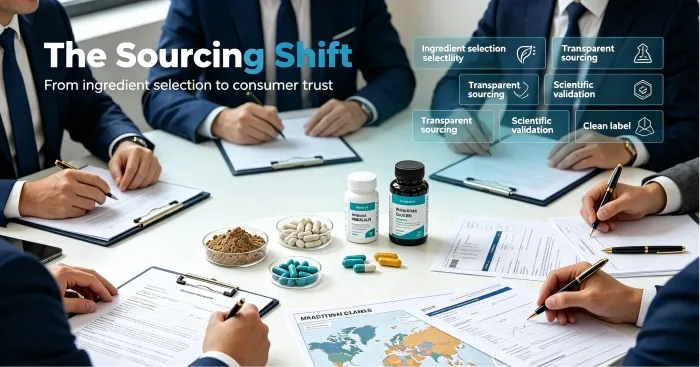
For brands that understand this shift, the path forward is clear: choose mineral forms that are bioavailable, well-tolerated, and backed by science. Make the ingredient story transparent and compelling. Educate consumers about why the form matters.
For sourcing professionals, this means partnering with suppliers who can provide not just raw materials, but also the scientific substantiation, transparency, and formulation expertise that brands need to win consumer trust.
The era of "just put some minerals in a capsule and call it a day" is over. The era of informed formulation—where every ingredient choice is a statement of quality, transparency, and scientific integrity—has arrived.
And for those who embrace it, the rewards are substantial.